
 英语
英语 中文简体
中文简体 俄语
俄语 西班牙语
西班牙语 阿拉伯语
阿拉伯语
¡No dude en contactarnos cuando nos necesite!
What Is a Vertical Lathe Used For?
 2026.07.01
 Noticias de la industria
Contenido
- 1 What Is a Vertical Lathe Used For? The Direct Answer
- 2 Core Operations a Vertical Lathe Performs
- 3 Why Vertical Orientation Matters: The Technical Advantages
- 4 Vertical Lathe vs. Horizontal Lathe: When to Choose Which
- 5 Industries and Typical Workpieces Machined on Vertical Lathes
- 6 CNC Vertical Lathe vs. Manual Vertical Lathe: How Control Technology Changes the Outcome
- 7 Key Specifications to Evaluate When Selecting a Vertical Lathe
- 8 What Makes a High-Quality CNC Vertical Lathe: Component Standards
- 9 Vertical Lathe Applications Across Production Volumes
- 10 Hongjia CNC Vertical Lathe Series: Purpose-Built for Heavy-Duty Precision Machining
What Is a Vertical Lathe Used For? The Direct Answer
A vertical lathe is a machine tool used primarily for turning, boring, drilling, milling, and tapping large-diameter, heavy, or short workpieces that would be impractical to mount and machine on a conventional horizontal lathe. The spindle axis is oriented vertically so the workpiece sits face-up on a rotating horizontal worktable, held in place by gravity and a chuck rather than relying on tailstock support. This configuration makes vertical lathes the preferred solution in industries such as aerospace, energy, heavy machinery, automotive, and shipbuilding—anywhere that large flanges, rings, hubs, gear blanks, pump casings, or turbine discs need to be machined with high roundness and flatness accuracy.
In short: if the part is wide, heavy, and short relative to its diameter, a vertical lathe is almost always the correct machine for the job.
Core Operations a Vertical Lathe Performs
Modern CNC vertical lathes are multi-function platforms capable of completing several operations in a single setup, reducing repositioning errors and saving cycle time. The primary operations include:
Turning and Facing
The worktable rotates the workpiece while a cutting tool mounted on the cross-rail or side head traces the contour. External and internal diameters, tapers, and face surfaces can all be turned to tight tolerances. Because the workpiece weight is fully supported by the rotary table rather than by a spindle nose and tailstock, runout and sag are virtually eliminated even on workpieces weighing several tonnes.
Boring
Large internal bores—common in pump housings, hydraulic cylinder bodies, and bearing housings—are machined with a boring bar mounted on the vertical ram. The vertical orientation keeps chips and coolant falling away from the cutting zone, improving tool life and surface finish compared to horizontal boring of the same feature.
Drilling and Tapping
Bolt-hole circles, tapped features, and axial holes can be added in the same setup using driven tool heads on CNC vertical lathes equipped with live tooling. This eliminates the need to transfer the heavy workpiece to a separate machining center, significantly reducing total production time.
Milling and Contouring
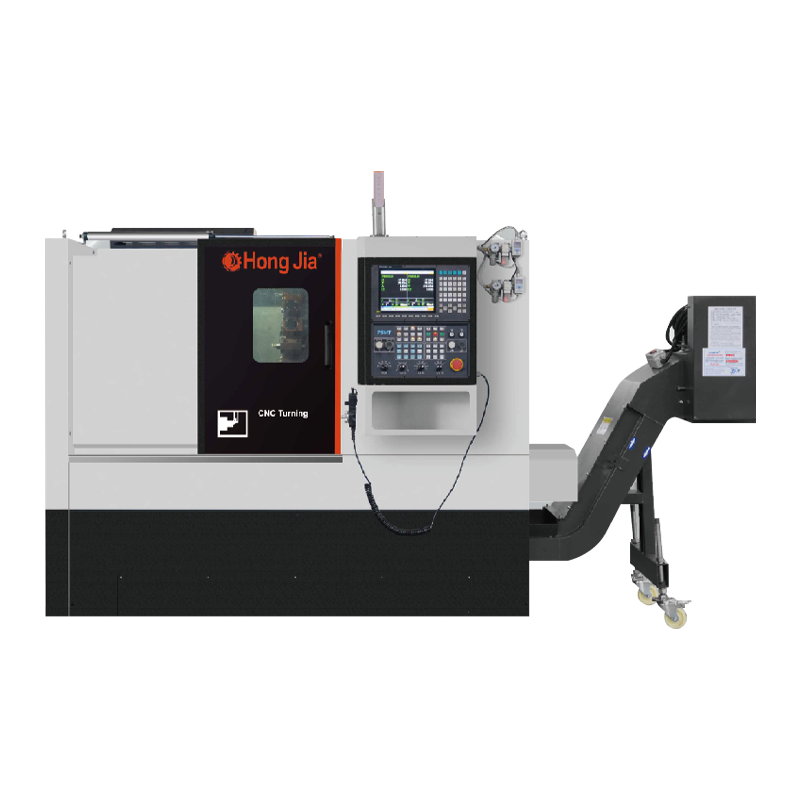
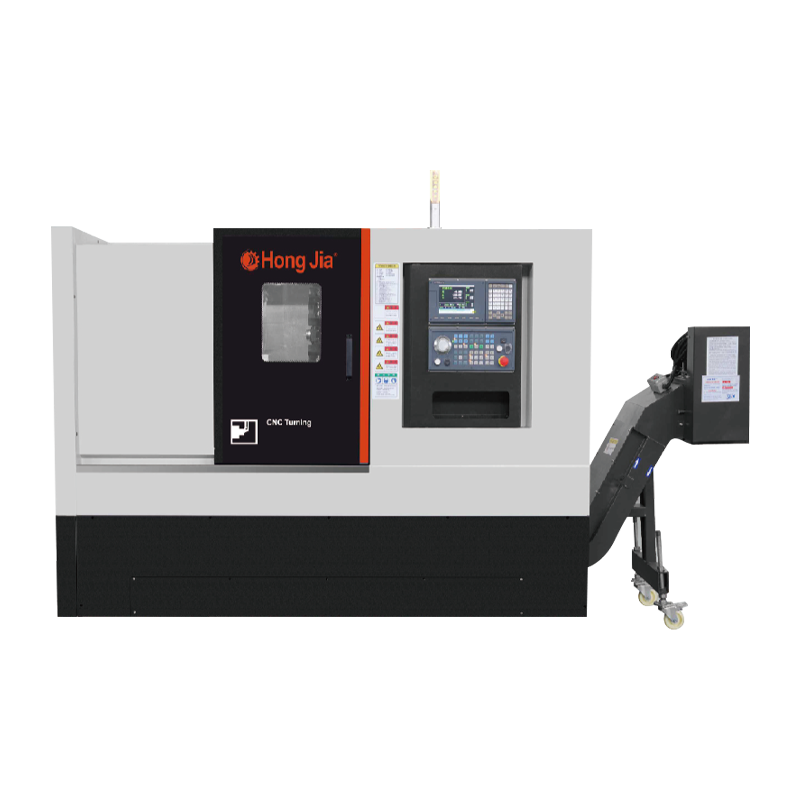
CNC vertical lathes with full multi-axis control and milling capability can machine keyways, pockets, and complex surface profiles. The SYNTEC-controlled CNC vertical lathes offered by Hongjia CNC, for example, are engineered to handle turning, drilling, boring, milling, and tapping within a single machine envelope, making them versatile production centers for complex large parts.
Why Vertical Orientation Matters: The Technical Advantages
The decision to orient the spindle axis vertically rather than horizontally is not merely a matter of convention—it delivers measurable engineering benefits for specific workpiece geometries.
Gravity-Assisted Stability
When a workpiece is mounted on a horizontal worktable, its own weight presses downward against the table surface, providing natural stability without requiring heavy axial clamping force. A horizontal lathe, by contrast, must counteract workpiece sag through tailstock support and chuck clamping force alone—forces that can distort thin-walled or large-diameter parts. The vertical layout aligns the workpiece's center of gravity with the spindle axis, minimizing vibration during rotation and improving roundness and end-face flatness on large-diameter parts.
Superior Clamping Convenience
Operators mount the workpiece from above rather than struggling to support it horizontally. For parts weighing hundreds or thousands of kilograms, this dramatically reduces setup time and the risk of clamping-induced deformation. Tool adjustment and in-process inspection can be performed from the side or top of the machine without repositioning.
Chip and Coolant Management
Chips fall naturally downward under gravity, away from the cutting zone and into the chip conveyor below. Coolant drains cleanly. Both factors contribute to longer tool life, better surface finish, and reduced machine downtime for cleaning—an important consideration in high-volume production environments.
Handling Heavy Workpieces
Vertical lathes can reliably process large and heavy workpieces that exceed the practical capacity of horizontal lathes. The robust rotary table and rigid column structure of a heavy-duty vertical lathe absorb cutting forces without the deflection that would occur when cantilever-mounting the same mass in a horizontal machine.
Vertical Lathe vs. Horizontal Lathe: When to Choose Which
Both machine types produce turned components, but each has a distinct domain of efficiency. The comparison below clarifies the selection criteria:
| Criteria | Vertical Lathe | Horizontal Lathe |
|---|---|---|
| Ideal workpiece shape | Large diameter, short axial length (discs, flanges, rings) | Long, slender shafts, cylinders, threads |
| Workpiece weight | Very heavy (hundreds to thousands of kg) | Light to medium weight |
| Clamping difficulty | Easy (gravity assists seating) | Moderate to difficult for heavy parts |
| Spindle deflection risk | Very low | Increases with part weight and diameter |
| Floor space footprint | Compact (height goes up, not out) | Longer floor length required for long parts |
| Typical industries | Heavy machinery, energy, aerospace, mining, shipbuilding | Automotive, general machining, valve production |
| Chip/coolant management | Excellent (gravity-assisted drainage) | Requires directed coolant systems |
Industries and Typical Workpieces Machined on Vertical Lathes
Understanding the breadth of applications clarifies why vertical lathes are indispensable in heavy manufacturing. The following industries rely on them for core production operations:
Energy and Power Generation
Turbine rotor discs, generator end-bells, compressor impellers, and large pump casings are among the most demanding workpieces in any machine shop. These parts combine large diameters (often exceeding 1,000 mm), extreme weight, and stringent roundness tolerances. A vertical lathe provides the only practical method for achieving the required end-face flatness and bore concentricity in a single setup.
Aerospace and Defense
Landing gear components, jet engine fan discs, structural frames, and large bearing housings require tight geometric tolerances on large-diameter features. The stability of the vertical lathe's worktable is essential for maintaining positional accuracy across the full diameter of the part, where even minor vibration translates directly into out-of-tolerance roundness.
Mining and Heavy Equipment
Crusher rings, mill liners, dragline sheaves, slewing rings for excavators, and large gearbox housings are routinely machined on vertical lathes. These parts are often made from hardened or high-alloy steels, requiring the rigidity and power that only a heavy-duty vertical lathe structure can deliver.
Shipbuilding and Marine Engineering
Propeller hubs, rudder stocks, propeller shafts (flanged ends), and large valve bodies are vertical lathe workpieces common in marine manufacturing. The workpiece diameters in this sector frequently exceed 2,000 mm, placing them firmly beyond the swing capacity of any horizontal lathe.
Automotive and Rail
Brake drums, wheel hubs, flywheel assemblies, and large differential carriers are machined in high volumes on CNC vertical lathes. The CNC system enables automated, repeatable machining cycles that reduce manual intervention and maintain consistent quality across batch production runs.
CNC Vertical Lathe vs. Manual Vertical Lathe: How Control Technology Changes the Outcome
Traditional manual vertical lathes relied on an operator to position the cross-rail, side head, and ram by hand using handwheels and graduated scales. While still available for certain repair and one-off applications, manual machines have been largely superseded in production environments by CNC vertical lathes that deliver measurable advantages:
- Dimensional repeatability: CNC positioning via ball screws and servo drives achieves consistent axis positioning accuracy across every cycle, eliminating the operator-to-operator variability inherent in manual operation.
- Complex contour machining: Two-axis simultaneous interpolation allows the CNC to cut tapered bores, radii, and profiled surfaces that would require multiple manual setups and skilled hand-feeding to approximate.
- Reduced cycle time: Programmed feeds and speeds run consistently at optimum values throughout the cut. Manual lathes often run conservatively to allow the operator to react to changing conditions.
- Automated tool management: Multi-station turrets or automatic tool changers on CNC vertical lathes allow several operations to be completed without manual tool changes, reducing idle time significantly.
- In-process measurement integration: Modern CNC vertical lathes can incorporate probing cycles that measure the workpiece during the cutting process and automatically adjust tool offsets to compensate for tool wear or thermal drift.
Key Specifications to Evaluate When Selecting a Vertical Lathe
Choosing the right vertical lathe requires matching the machine's specifications to the actual range of workpieces it will process. The following parameters are the most critical:
| Specification | What It Determines | Practical Implication |
|---|---|---|
| Worktable Diameter | Maximum workpiece seating diameter | Must be equal to or larger than the workpiece base diameter |
| Maximum Swing (Turning Diameter) | Largest diameter that can be turned | Defines the machine's capacity envelope for OD turning |
| Maximum Workpiece Height | Tallest part the machine can accommodate under the cross-rail | Critical for tall drum or housing workpieces |
| Maximum Load Capacity | Heaviest workpiece the table can safely rotate | Overloading causes table bearing wear and accuracy loss |
| Spindle Speed Range | Available cutting speeds for various diameters and materials | Wide range needed to handle both roughing and finishing on different materials |
| CNC Control System | Programming capability, axis count, and user interface | Affects ease of programming, part complexity achievable, and integration with CAM software |
| Coolant Tank Capacity | Volume of coolant available for continuous cutting | Larger capacity (e.g., 100L) supports extended heavy-cutting cycles without interruption |
What Makes a High-Quality CNC Vertical Lathe: Component Standards
The performance and longevity of a vertical lathe are largely determined by the quality of its core mechanical and control components. When evaluating machines, pay close attention to the following:
Linear Guides and Ball Screws
Precision linear guides and ball screws sourced from established manufacturers in Taiwan or Japan are the benchmark for vertical lathes used in production environments. These components determine axis positioning accuracy, repeatability, and resistance to backlash. Machines equipped with premium linear guides and ball screws maintain their accuracy specification over a longer service life, reducing the frequency of geometric compensation and recalibration.
Spindle Motor and Drive System
A high-torque servo spindle motor with a wide speed range is essential for a vertical lathe that must handle both heavy roughing cuts at low RPM and light finishing passes at higher speeds. The drive system should deliver consistent torque across the full speed range without hunting or oscillation that would degrade surface finish.
CNC Controller
The controller is the intelligence of the machine. Advanced CNC controllers support conversational programming for common turning cycles, full G-code programming for complex profiles, real-time feed and speed override, and integration with probing and in-process gauging systems. Controllers from established Taiwanese CNC specialists—such as the SYNTEC SYTEC/7TA-E used in Hongjia CNC's vertical lathe series—offer a proven combination of reliability, functionality, and operator-friendly interface for industrial production use.
Structural Rigidity
The column, cross-rail, and worktable casting must be rigid enough to resist deflection under the combined weight of the workpiece and the forces generated during heavy cutting. Finite-element-optimized ribbing patterns in cast iron or welded steel construction are common in quality machines. Rigidity directly determines the depth of cut achievable and the surface finish produced at a given feed rate.
Chip Conveyor and Coolant System
Effective chip removal prevents chip re-cutting, which damages both the workpiece surface and the cutting tool. An integrated chip conveyor and an adequately sized coolant tank—a 100L capacity is typical in Hongjia CNC's vertical lathe configurations—maintain clean cutting conditions throughout extended production runs.
Vertical Lathe Applications Across Production Volumes
Vertical lathes serve both job-shop one-off production and high-volume batch manufacturing, with the CNC system being the key enabler of efficient batch work.
One-Off and Repair Machining
In repair workshops and job shops, vertical lathes are used to restore worn surfaces on large industrial components—refacing pump impeller seals, regrinding gear blank bores, or reconditioning large valve bodies. The wide worktable accommodates a variety of part geometries without requiring special fixturing, making the machine productive even when processing unique or irregular components.
Small-Batch Production
For small-batch runs of 5 to 50 parts, a CNC vertical lathe programmed with a standard part program delivers consistent quality at far lower per-part cost than manual operation. The CNC system enables automated machining, reducing manual intervention and avoiding the cumulative errors that arise when operators must re-establish each cut manually.
High-Volume Batch Production
In automotive and rail component manufacturing, CNC vertical lathes run largely unattended for extended shifts, cycling through part programs repeatedly. Automatic tool changers and in-process probing allow the machine to self-compensate for tool wear, maintaining dimensional consistency across hundreds of parts without operator intervention beyond periodic quality checks.
Hongjia CNC Vertical Lathe Series: Purpose-Built for Heavy-Duty Precision Machining
Ningbo Hongjia CNC Technology Co., Ltd. is a high-tech enterprise located in the Qianwan New District of Ningbo, Zhejiang Province, dedicated to the research, development, production, and sales of CNC metal-cutting equipment. Since its founding, Hongjia CNC has focused on technological innovation and market responsiveness, delivering efficient, stable, and reliable CNC machines to clients worldwide with solutions tailored to specific production requirements.
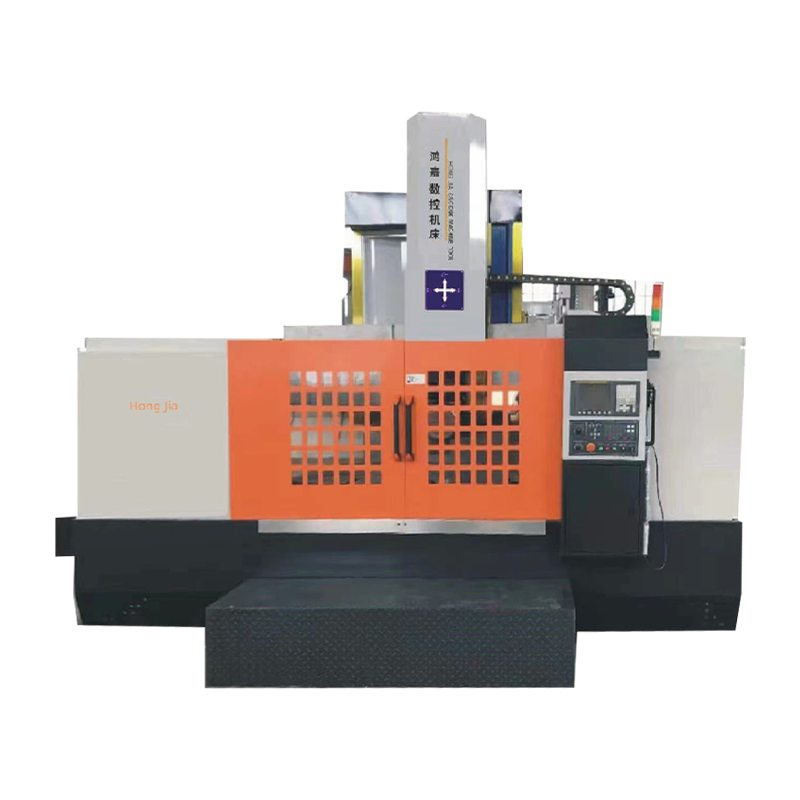
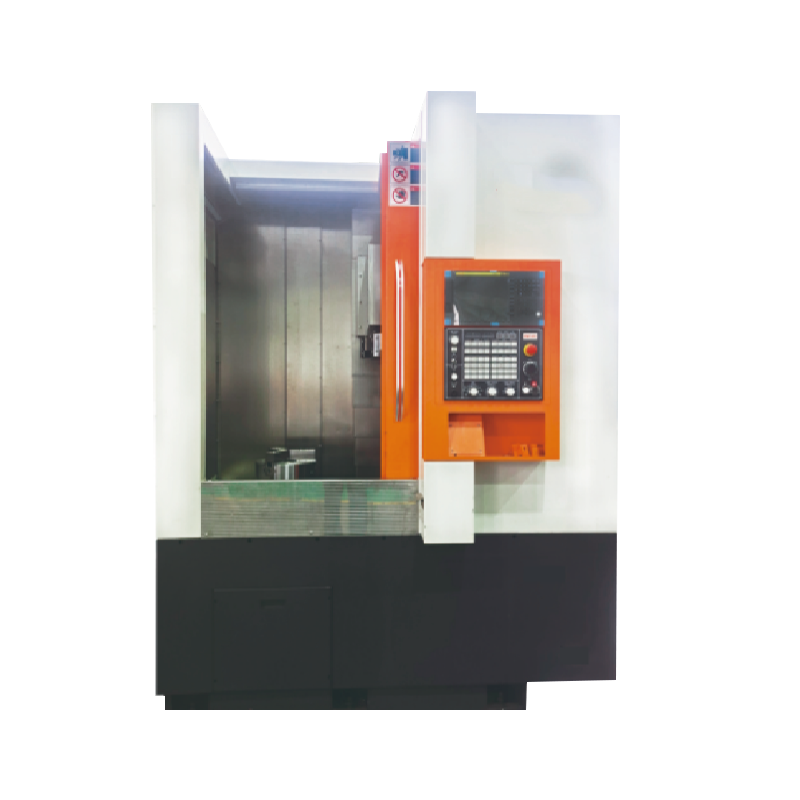
The Hongjia CNC vertical lathe series is engineered to address the full spectrum of large-part machining requirements. Key engineering features include:
- Multi-operation capability: Turning, drilling, boring, milling, and tapping are all executable within a single machine setup, eliminating workpiece transfer between machines and reducing fixturing error accumulation.
- Exceptionally rigid structure: The heavy-duty cast construction of the column and base is optimized for high-performance, heavy-duty cutting with outstanding machining accuracy maintained under load.
- Premium motion components: Premium linear guides and ball screws sourced from Taiwan or Japan ensure long-term positioning accuracy and low maintenance requirements.
- SYNTEC CNC control: The SYNTEC SYTEC/7TA-E controller with SYNTEC servo spindle motor delivers reliable, precise axis control across demanding cutting cycles, supported by a semi-closed loop control method for stable accuracy.
- Hydraulic three-jaw chuck: Power clamping reduces setup time and ensures consistent clamping force across all parts in a production batch.
- 100L removable coolant tank with chip conveyor: The large-capacity coolant system and integrated chip conveyor maintain clean cutting conditions and allow extended uninterrupted machining cycles.
- One-year warranty and full after-sales support: Hongjia CNC provides troubleshooting and technical support backed by extensive industry experience, with custom model recommendations available based on submitted workpiece drawings.
Whether the application is a single aerospace component or a long production run of large automotive hubs, Hongjia CNC's vertical lathe series provides the structural rigidity, control precision, and multi-operation flexibility required to machine large, heavy workpieces with confidence.
Derechos de autor © Ningbo Hongjia CNC Technology Co., Ltd.
